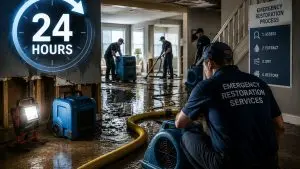

The professional process for water damage restoration broomfield involves a systematic approach starting with emergency water extraction, followed by moisture stabilization and structural drying. In the high-altitude climate of Colorado, moisture behaves differently than at sea level, often wicking deep into porous materials like drywall and subflooring within the first few hours. Whether you are dealing with a burst pipe in the Broadlands or a failed sump pump near Flatiron Crossing, the goal of a professional team is to return your home to its pre-loss condition while preventing secondary damage like mold. This guide details the essential steps required to restore a property effectively in the Broomfield area.
What is the first step in water damage restoration?
The first step in any restoration project is a comprehensive site assessment and emergency water extraction to prevent further saturation of building materials. Technicians use thermal imaging cameras and moisture meters to map the migration of water behind walls and under floors. Once the “Category” of water (clean, gray, or black) is identified, heavy-duty truck-mounted vacuums are used to remove standing water, which significantly reduces the overall drying time required for the structure.
In Broomfield, this initial phase is critical because the local clay-heavy soil can trap moisture around foundations in neighborhoods like Anthem or Wildgrass. If the water remains stagnant for more than 24 hours, the risk of structural warping increases. By performing a rapid extraction, restoration experts stabilize the indoor environment and set the stage for the technical drying phase.
What are the primary water restoration steps Broomfield experts follow?
Professional water damage restoration broomfield follows a standardized set of water restoration steps Broomfield residents should be aware of to ensure the job is done correctly. These steps are designed to address both the visible water and the hidden moisture that causes long-term structural rot. Following the initial extraction, the team moves into stabilization, drying, and finally, the reconstruction of any materials that were too damaged to save.
If you are unsure if your home has been properly stabilized, you can contact us to have a certified professional review your current moisture levels. Many homeowners in the Interlocken district find that while surfaces look dry, the internal wall studs remain dangerously wet, requiring prolonged industrial dehumidification to prevent future mold blooms.
The technical extraction and drying process CO homeowners need
The extraction and drying process CO relies on industrial-grade equipment that goes far beyond what a household fan can accomplish. High-velocity air movers are strategically placed to create a vortex of air across wet surfaces, while LGR (Low Grain Refrigerant) dehumidifiers pull moisture out of the air to maintain a specific “dry standard.”
- Placement of air movers every 10 to 14 linear feet to facilitate evaporation.
- Use of dehumidifiers to maintain relative humidity below 40 percent.
- Daily monitoring of moisture points to track the progress of the drying cycle.
- HEPA air scrubbing to remove airborne contaminants during the process.
Understanding the professional mitigation timeline
The professional mitigation timeline typically lasts between three and five days for a standard residential water loss. During the first 24 hours, the focus is on “mitigation”—stopping the spread of damage. Days two through four are dedicated to “stabilization,” where the equipment runs continuously to pull moisture from the structural elements of the home.
If the drying process is taking longer than expected, it may be due to the density of the materials in your Broomfield home, such as thick hardwood or stone. You can contact us to receive a detailed progress report that explains the specific drying curves for different areas of your property. Homes near the Broomfield County Commons Park often feature high-end finishes that require a more delicate, prolonged drying approach.
How do professionals handle hidden moisture?
Professionals handle hidden moisture by using non-invasive tools like infrared cameras and penetrating moisture probes to find water trapped in wall cavities and insulation. In the Front Range, water often travels along sill plates and into the “dead space” behind cabinetry. If these areas are not vented or addressed, they become silent breeding grounds for mold and dry rot, even if the carpet feels dry to the touch.
| Restoration Phase | Typical Duration | Core Objective |
| Emergency Response | 1 – 4 Hours | Site safety and source containment |
| Water Extraction | 2 – 6 Hours | Removal of bulk liquid and standing water |
| Structural Drying | 3 – 5 Days | Reaching dry standards for building materials |
| Decontamination | 1 – 2 Days | Sanitizing and antimicrobial applications |
| Reconstruction | 1 – 2 Weeks | Repairing drywall, paint, and flooring |
Why is humidity control vital in the high-desert climate?
Humidity control is vital because Broomfield’s naturally dry air can be deceptive; while the ambient air is dry, the micro-environment within a wet basement or crawlspace remains stagnant. If a restoration team does not use professional dehumidification, the moisture will move from the “wet” building materials into the “dry” materials in a process called secondary damage. This can lead to the peeling of wallpaper, the buckling of wood trim, and the failure of electrical systems throughout the house.
If you notice that your home feels unusually humid after a minor leak, it is important to contact us for a humidity check. Proper air exchange is necessary to ensure that the water being evaporated from your floors does not simply settle back into your ceiling or furniture near the Great Western Reservoir area.
What materials usually need to be replaced after a flood?
Certain materials, known as “porous” materials, often cannot be fully sanitized and must be replaced to ensure the health and safety of the home. This includes carpet padding, which acts like a sponge for contaminants, and standard fiberglass insulation, which loses its R-value and structural integrity when saturated. Drywall that has absorbed more than an inch of water or has been wet for more than 48 hours is also typically removed to allow for air circulation to the wall studs.
- Carpet padding: Almost always replaced due to low cost and high contamination risk.
- Drywall: Removed at least 12 inches above the water line (the “flood cut”).
- Laminate flooring: Generally unsalvageable as the internal fiberboard swells quickly.
- Insulation: Blown-in or batt insulation must be removed if it comes into contact with water.
How does the restoration process differ for sewage?
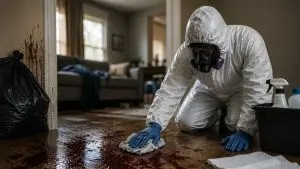
Restoration for sewage, or “Black Water,” follows a much more aggressive protocol involving full biohazard decontamination and the removal of all porous materials regardless of their appearance. Technicians must wear full Personal Protective Equipment (PPE) and use EPA-registered hospital-grade disinfectants. In Broomfield, any backup involving a main sewer line or storm drain is considered a high-risk event that requires specialized certification to manage.
If you are dealing with a foul-smelling backup in your basement, you should contact us immediately to isolate the area. Do not attempt to clean sewage with a household mop, as this can cross-contaminate other parts of your home, such as your kitchen or living areas near Northmoor Estates.
What should you expect during the final inspection?
During the final inspection, a lead technician will take a final set of moisture readings to prove that all affected materials have returned to their “dry standard” or “equilibrium moisture content.” This documentation is essential for your insurance company to close the claim and for your own peace of mind. Once the drying is certified, the equipment is removed, and the property is handed over to the reconstruction team for finishing work.
If you have questions about the final moisture reports, you can contact us for a walkthrough of the data. We ensure that every Broomfield homeowner understands the metrics used to determine that their home is officially dry and safe for reconstruction near the local residential hubs.
Frequently Asked Questions
How long does the average water restoration take?
A professional mitigation and drying project usually takes 3 to 5 days. If structural repairs like new drywall or flooring are needed, the entire process from start to finish can take 2 to 3 weeks.
Can I stay in my home during the drying process?
It depends on the extent of the damage and the noise level. Industrial air movers are loud and can be disruptive, and if the water was contaminated (sewage), it is often safer to stay elsewhere until the area is sanitized.
Will the restoration process get rid of the smell?
Yes. Professional restoration includes the use of ozone machines or hydroxyl generators that neutralize odors at a molecular level. We also apply antimicrobial treatments to prevent the musty smell associated with mold growth.
Is the equipment safe for my pets?
The drying equipment is safe, but the high-velocity air and loud noise can be stressful for pets. It is usually best to keep animals in a separate, dry part of the house or at a boarding facility until the equipment is removed.
What if I find more water after the crew leaves?
A professional final inspection should prevent this, but if you notice new dampness, it could mean the source was not fully repaired. Contact your restoration provider immediately to perform a follow-up moisture check.
Conclusion
Understanding the phases of recovery can help reduce the anxiety that follows a property disaster in the Front Range. From the initial emergency response near the 1stBank Center to the final moisture certification in the neighborhoods of Anthem, the restoration process is designed to be thorough and transparent. By following a scientific approach to drying and decontamination, professionals ensure that your home remains a safe and stable environment for your family.
Elite Restorers is a trusted local service provider dedicated to helping our neighbors through every step of the recovery journey. We position ourselves as a solution to the problems discussed in this guide, providing a comprehensive water damage restoration broomfield service that prioritizes technical excellence and customer communication. Our team is equipped to handle the unique challenges of the Colorado climate, ensuring your restoration is handled with the precision it deserves. If you are starting the recovery process or have concerns about a recent leak, you can contact us to ensure your property is restored the right way.