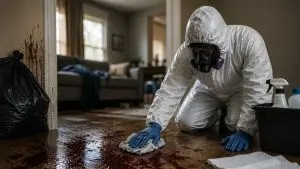

Water damage in the Front Range almost always leads to mold problems if the moisture is not professionally extracted and dried within 24 to 48 hours. Even though the local climate is semi-arid, the micro-environment created behind wet drywall or under saturated carpeting in a neighborhood like Broadlands provides the perfect humidity for fungal spores to colonize. To protect your property and indoor air quality, successful water damage restoration broomfield must include a focus on deep structural drying and antimicrobial treatments. This guide explores the relationship between moisture and mold in the Broomfield area and provides actionable steps for prevention and remediation.
How long does it take for mold to grow after water damage?
Mold can begin to grow and colonize on organic materials like wood, paper, and fabric in as little as 24 hours after a moisture event occurs. While the visible signs of mold may not appear for several days, the microscopic spores are already rooting into porous surfaces, making it essential to start the drying process immediately. In Colorado, the transition from a simple leak to a mold infestation is often accelerated in finished basements near Flatiron Crossing where ventilation is limited and humidity remains trapped.
In Broomfield, homeowners often underestimate the speed of growth because of the low outdoor humidity. However, moisture trapped in wall cavities or under floorboards creates a pressurized humidity zone that can sustain a colony indefinitely. If you wait more than two days to address a burst pipe or a localized flood, the project will likely transition from standard water mitigation to a more complex and expensive mold remediation effort.
What is the best way to ensure mold prevention after water damage?
The most effective strategy for mold prevention after water damage is the use of industrial-grade dehumidification and high-velocity air movers to reach a specific “dry standard” in all building materials. Surface drying is never enough; the core of the wall studs and the subfloor must be checked with moisture meters to ensure no hidden pockets of water remain. If the moisture levels remain above 16 percent in wood or 1 percent in drywall, mold will eventually return.
If you are dealing with a leak in your home, you can contact us to perform a professional moisture mapping session. We use thermal imaging to find hidden dampness behind cabinets and under stairs, which are the most common areas for mold to start in homes near the Broomfield County Commons Park. By identifying these hidden risks early, we can apply the necessary airflow to prevent fungal growth before it becomes a health hazard.
Critical moisture control Broomfield tips for homeowners
Implementing consistent moisture control Broomfield practices is the only way to safeguard your home against seasonal moisture issues. Given the heavy snowmelt and sudden summer storms in the region, your home’s exterior drainage system must be optimized to keep water away from the foundation and crawlspace.
- Maintain your gutters and ensure downspouts extend at least 5 to 10 feet away from the home.
- Keep your home’s relative humidity between 30 and 50 percent using a hygrometer.
- Ensure all bathrooms and kitchens are vented directly to the outside, not into the attic.
- Inspect your sump pump twice a year, especially if you live near the Great Western Reservoir.
Professional mold remediation tips CO for local properties
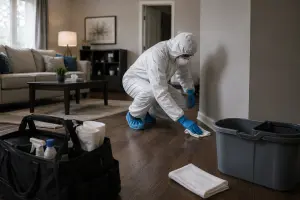
Following a significant water loss, these mold remediation tips CO can help you manage the recovery process effectively. If mold is already present, do not use a standard fan to dry the area, as this will simply blow spores throughout the rest of your home, contaminating the HVAC system. Instead, the area must be placed under negative air pressure with HEPA filtration to capture spores at the source.
If you discover a musty smell or visible spotting in your basement, you should contact us to discuss safe containment protocols. Properties in the Interlocken district often feature complex HVAC layouts that can easily spread contaminants if the initial water damage was not handled with proper containment barriers.
- Isolate the affected area with heavy plastic sheeting and tape.
- Use EPA-registered antimicrobial solutions rather than household bleach.
- Remove and discard porous materials that show signs of heavy mold penetration.
- Conduct a post-remediation clearance test to ensure air quality has returned to safe levels.
Does water damage restoration broomfield include mold testing?
Comprehensive water damage restoration broomfield should include a post-drying inspection to verify that the environment no longer supports mold growth. While not every small leak requires professional lab testing, large-scale floods or sewage backups often necessitate an air quality test to confirm the home is safe for residents. Technicians look for “equilibrium moisture content” in the building materials to prove the structure is stable.
If you are concerned about the air quality in your home following a flood, you can contact us to arrange for a certified third-party mold inspection. This provides an unbiased report on the fungal spore counts in your home compared to the outdoor air, ensuring that the remediation work was successful in the areas around the 1stBank Center and surrounding neighborhoods.
Where does mold hide after a Broomfield water event?
In Broomfield homes, mold typically hides in areas where airflow is restricted, such as the back of closets, inside wall cavities, and under the carpet padding. Homes in neighborhoods like Anthem or Wildgrass often have well-insulated walls that are great for energy efficiency but can trap moisture for weeks if a pipe leaks internally. Mold can also develop inside the HVAC ductwork if water was allowed to enter the floor vents during a basement flood.
| Location | Likelihood of Mold | Detection Method |
| Wall Cavities | High | Infrared cameras / moisture probes |
| Carpet Padding | Critical | Physical inspection / odor checks |
| Attic Sheathing | Medium | Visual inspection for roof leaks |
| Crawlspaces | High | Humidity sensors / visual checks |
| Behind Cabinetry | High | Borescope cameras |
Why is sewage-related water damage a higher mold risk?
Water damage from sewage, known as Category 3 water, carries a much higher risk for rapid mold and bacterial growth because it contains organic “food” sources for the fungi. The bacteria present in the water can actually speed up the decomposition of building materials, making it easier for mold to take root. In Broomfield, any backup involving a floor drain or main line near Northmoor Estates must be treated as a biohazard emergency that requires immediate sanitization.
If you have experienced a sewage backup, it is vital to contact us before attempting any cleanup yourself. The combination of pathogens and the high potential for toxic mold growth makes professional intervention a requirement for maintaining a habitable and healthy home environment.
Can you prevent mold if the power is out during a storm?
Preventing mold during a power outage is challenging because your sump pump and dehumidifiers will not function. In these cases, the priority should be to manually remove as much water as possible and create cross-ventilation once the rain stops. However, without industrial-grade drying, the risk of mold remains high. Once power is restored, a professional team should evaluate the home to find moisture that was able to soak deep into the structure during the downtime.
If you frequently lose power during summer storms, you can contact us to discuss installing a battery-backup for your sump pump. This is one of the most effective ways to prevent basement flooding and subsequent mold problems in the more rural or exposed areas of the Front Range.
What are the health symptoms of mold exposure?
Exposure to mold can cause a variety of health issues, particularly for individuals with respiratory conditions, allergies, or weakened immune systems. Common symptoms include persistent sneezing, runny nose, red eyes, and skin rashes. In more severe cases involving “black mold” or Stachybotrys, individuals may experience chronic fatigue, headaches, and difficulty breathing, which is why professional remediation is so important for the safety of your family.
Frequently Asked Questions
Can I just use bleach to kill mold?
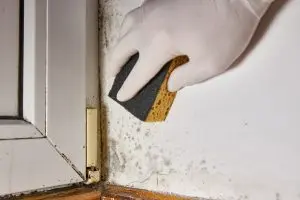
Bleach is generally ineffective for killing mold on porous surfaces like drywall or wood because the mold roots extend deep into the material where the bleach cannot reach. It may remove the surface stain, but the mold will likely return as soon as the area becomes damp again.
How much does mold remediation cost in Broomfield?
The cost varies based on the size of the affected area, but most residential projects range from $1,500 to $5,000. If the mold has spread into the HVAC system or multiple rooms, the cost can be significantly higher due to the containment requirements.
Does homeowners insurance cover mold?
Most policies have a “mold cap” which limits the payout for mold-related repairs, often between $1,000 and $5,000. However, if the mold is a direct result of a covered water damage event that was handled promptly, you may have more success with your claim.
Is all mold toxic?
While not all mold species produce mycotoxins, all molds can cause allergic reactions and structural damage. It is best to treat all indoor mold growth as a potential health hazard and have it removed by a professional.
Can mold grow in a dry climate like Colorado?
Yes. Mold only needs a small amount of moisture and a food source (like drywall) to grow. Even in a dry climate, a small plumbing leak provides enough localized humidity for a colony to thrive behind your walls.
Conclusion
Mold growth is an avoidable consequence of water damage if the restoration process is handled with speed and technical precision. By prioritizing thorough extraction and industrial drying in the first 48 hours, Broomfield homeowners can protect their property from the long-term health and financial risks associated with fungal infestations. Understanding the unique moisture challenges of the Front Range and maintaining a vigilant eye on your home’s humidity levels are the best defenses against the silent threat of mold.
Elite Restorers is a trusted local service provider with extensive experience in navigating the complex relationship between moisture and mold. We position ourselves as a solution to the problems discussed in this guide, providing a comprehensive water damage restoration broomfield service that includes certified mold prevention and remediation. Our team uses the latest technology to ensure your home is not just dry, but healthy and safe for your family to occupy. If you are concerned about potential mold growth or have recently suffered a water loss, you can contact us to receive the expert assessment and treatment your property needs.