
Blood, bodily fluids, and other biological materials left behind after an accident, unattended death, or crime scene are not something a homeowner should try to clean up on their own. Beyond the emotional weight of the situation, these materials can carry serious health risks that require specific handling.
Biohazard cleanup follows a different set of rules than typical cleaning, both for safety and because certain waste has to be disposed of according to health regulations. Understanding what the process actually involves can make a difficult moment a little easier to navigate.
This article explains what biohazard cleanup covers, the safety steps involved, and how biohazard cleanup in Littleton, CO is typically carried out from start to finish.
What Counts as a Biohazard Cleanup Situation
Biohazard cleanup applies to any situation involving blood, bodily fluids, or other biological materials that pose a potential health risk. Common situations include unattended or traumatic deaths, accidents involving significant blood loss, crime scenes, and certain infectious disease cleanup situations.
Because these materials can carry bloodborne pathogens, proper cleanup requires more than soap, water, and household disinfectant. Materials that have absorbed biological fluids, such as carpet, flooring, or drywall, often need to be removed and disposed of rather than simply cleaned.
Why Professional Cleanup Matters
Household cleaning products are not designed to neutralize the pathogens that can be present in blood or other bodily fluids. Attempting to clean these situations without the right protective equipment and disinfection process puts anyone involved at unnecessary risk.
There is also a legal and regulatory side to biohazard cleanup. Certain waste generated during the process is classified as regulated medical waste and has to be transported and disposed of according to state and local requirements, not placed in regular household trash.
Beyond the health and legal considerations, biological contamination can also spread to areas that are not immediately obvious, such as subflooring beneath carpet or gaps between baseboards and walls. A thorough assessment helps make sure cleanup addresses the full extent of the contamination rather than only the surfaces that are visible.
Safety Precautions During Biohazard Cleanup
Handling biological materials safely requires specific precautions at every stage of the process. A few of the most important include:
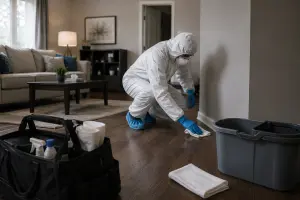
- Wearing personal protective equipment such as gloves, masks, and protective suits
- Containing the affected area to prevent cross contamination to unaffected rooms
- Using EPA registered disinfectants appropriate for bloodborne pathogens
- Properly bagging and labeling any regulated waste for disposal
- Ventilating the space appropriately during and after cleanup
These precautions protect both the people performing the cleanup and anyone who uses the space afterward.
How the Biohazard Cleanup Process Works
Biohazard cleanup requires a careful, step-by-step approach to protect people from potential exposure and prevent contamination from spreading. The exact steps can vary depending on the type and extent of the contamination, but professional cleanup generally follows a structured process. Here is what to expect:
1. Assessing the Affected Area
The process starts with an assessment of the scene to determine how far the contamination has spread. Biological fluids can seep into flooring, subflooring, and even wall cavities depending on the surface and how long the material sat before cleanup began.
This assessment determines which materials can be cleaned and disinfected in place and which need to be removed entirely.
2. Removing Contaminated Materials
Porous materials that have absorbed blood or bodily fluids, such as carpet, padding, or in some cases drywall, typically cannot be fully disinfected and need to be removed. Non-porous surfaces like tile, sealed concrete, or certain hard flooring can often be cleaned and disinfected directly.
3. Cleaning and Disinfecting the Space
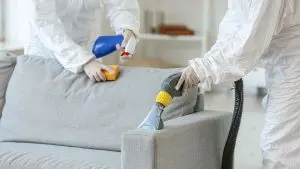
Once contaminated materials are removed, the remaining surfaces are cleaned and treated with disinfectants designed to address bloodborne pathogens. This step often requires multiple applications depending on the extent of the contamination.
4. Proper Disposal of Regulated Waste
Materials removed during cleanup that are considered regulated medical waste have to be bagged, labeled, and transported according to applicable health regulations. This is one of the areas where professional cleanup differs most from general home cleaning, since improper disposal can carry legal consequences.
5. Deodorizing and Final Inspection
After cleaning and disinfection, the space is typically deodorized to address any lingering odor from biological materials. A final inspection confirms the area meets safety standards before it is considered ready for normal use.
What Homeowners Should Avoid Doing?
If you are waiting for a professional cleanup crew to arrive, avoid touching or attempting to clean the affected area yourself. Without proper protective equipment, direct contact with blood or bodily fluids carries a real risk of exposure to bloodborne pathogens.
It is also worth avoiding unnecessary foot traffic through the affected area, which can spread contamination to unaffected parts of the home.
Biohazard Cleanup Considerations for Littleton Homeowners
Littleton households dealing with a biohazard situation are sometimes also managing the aftermath of a law enforcement investigation, an insurance claim, or a landlord and tenant situation, on top of an already difficult event. Coordinating cleanup with any relevant authorities or property management before work begins can help avoid complications later.
Homeowners should also be aware that certain cleanup situations, particularly those involving a death investigation, may require clearance from local authorities before cleanup can begin. Rental property owners and landlords in the Littleton area may also need to coordinate cleanup timing with tenants or leasing requirements, particularly when a unit needs to be turned over quickly.
Our Approach to Biohazard Cleanup
When Elite Restorers is called for a biohazard cleanup situation, we begin with an assessment to determine the extent of contamination and which materials can be salvaged. From there, our team follows appropriate safety protocols, including personal protective equipment and containment of the affected area, throughout the cleaning and disinfection process.
We handle the removal and disposal of regulated waste according to applicable requirements, and we deodorize the space once cleaning and disinfection are complete. Throughout the process, we aim to handle a difficult situation with care and discretion for everyone involved.
Frequently Asked Questions
Who typically handles biohazard cleanup after an accident or death?
Trained biohazard cleanup professionals handle these situations because of the health risks and disposal regulations involved. Attempting cleanup without proper protective equipment and disinfection products puts anyone involved at unnecessary risk.
Is biohazard cleanup covered by insurance
Coverage depends on your specific policy and the circumstances of the situation. Homeowners insurance sometimes covers biohazard cleanup related to certain covered events, so it is worth contacting your insurance provider to confirm what applies to your situation.
How long does biohazard cleanup typically take?
The timeline depends on the extent of the contamination and how many materials need to be removed and disposed of. A contained situation may take a matter of hours, while more extensive contamination can take longer.
Can carpet or flooring be saved after a biohazard situation?
It depends on the material and how much contamination occurred. Porous materials that absorb blood or bodily fluids typically cannot be fully disinfected and usually need to be removed and replaced.
Do I need to move out of my home during biohazard cleanup?
In many cases, homeowners can remain elsewhere in the home while a specific area is being cleaned, though this depends on the location and extent of the contamination. A professional can advise on what makes sense for your specific situation.
Final Thoughts on Biohazard Cleanup in Littleton, CO
Biohazard cleanup requires specialized safety equipment, disinfection methods, and disposal procedures that go well beyond typical household cleaning. Trying to handle it without professional support puts your health at risk and can leave contamination behind that is not visible on the surface.
If you are dealing with a biohazard situation in your Littleton home, Elite Restorers can assess the affected area and walk you through what our cleanup and disinfection process would involve. Reaching out promptly helps limit how far contamination spreads and gets the space safely back to normal.